8-week academic project for a senior interaction design course.
Bye-nary helps 2SLGBTQIA+ users' to freely but safely interact in a space where they can express their gender identity.
Bye-nary is an interactive narrative game mobile application designed in Interface Design course as a team. Bye-nary utilizes game mechanic elements to create a journey for the user into discovering more about 2SLGBTQIA+ terms, vignettes of the experiences of non-binary and trans people in Vancouver, and discover local non-binary/trans businesses and spaces.
I would like to have a better understanding of the experiences in queer people’s lives, and create opportunities for them to take initiative in their health and wellbeing.
My goal is to help non-binary and trans people to freely explore their gender identity, as previously they didn’t have the awareness or language to articulate themselves. Their education growing up was oriented around the gender binary, which our audience do not necessarily align with.

Skills: UX research, wireframing, Prototyping, graphic design, animation.
I began with researching and understanding our targeted audience and as a team, selected our final design domain to work with – "Health and wellbeing for the 2SLGBTQIA+ Community ". I have conducted both primary and secondary research to learn about the experiences of the 2SLGBTQIA+ community’s lives.
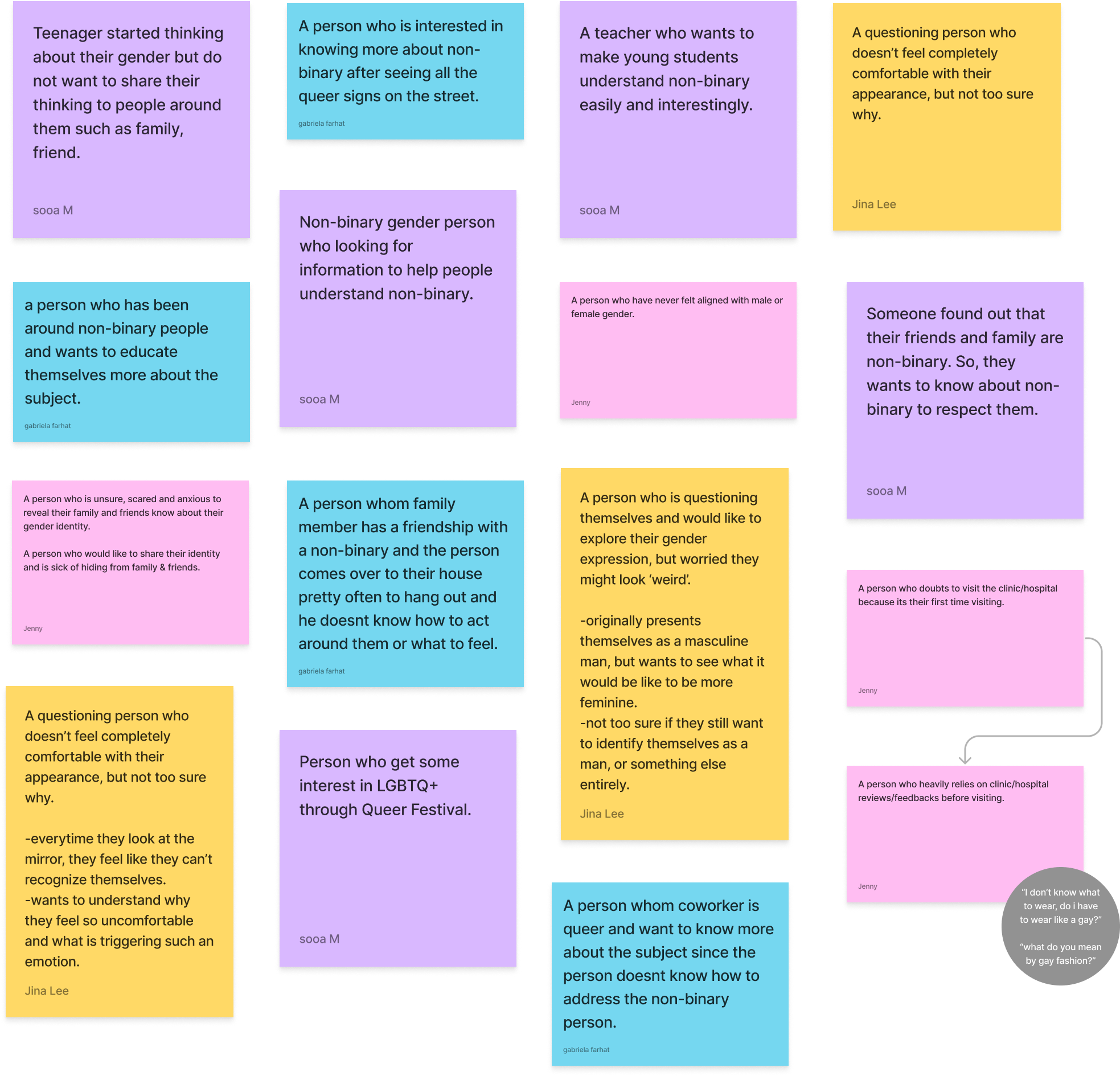
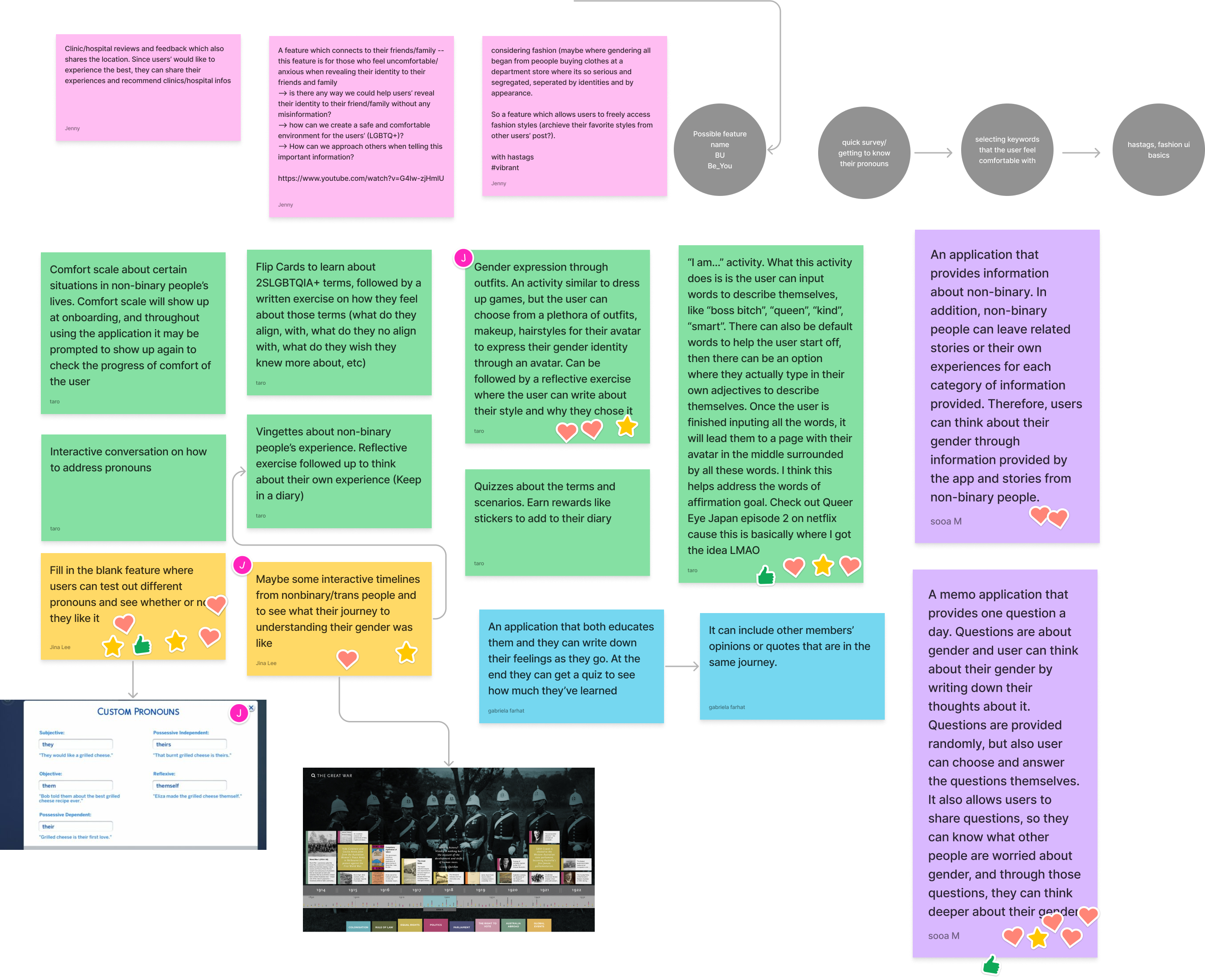
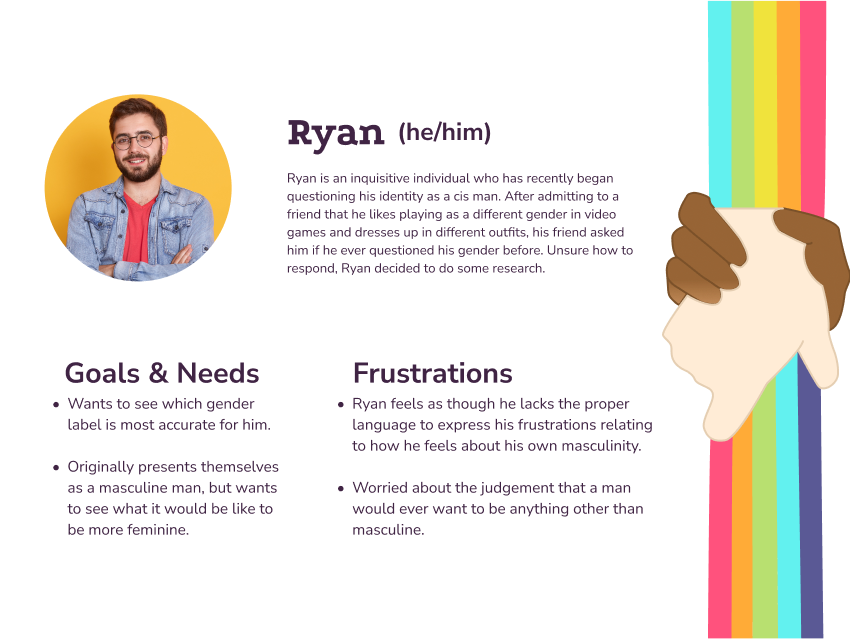
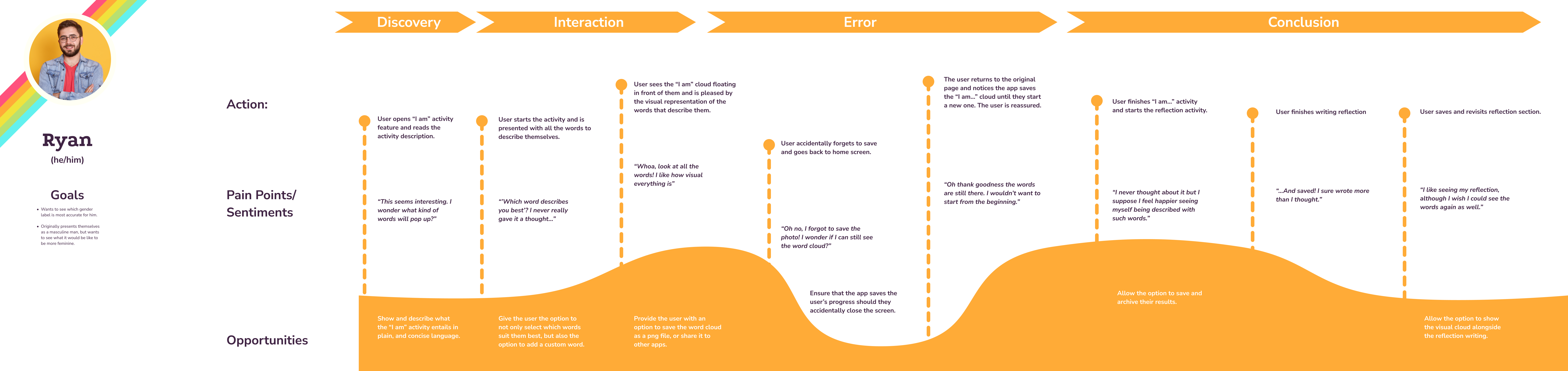
2SLGBTQIA+ people often struggle in their process to coming out due to a variety of factors that often prevent them from coming out until they have reached adulthood. This inability to feel accepted by those in their immediate circle, as a result, may cause physical and emotional scars moving forwards if their needs are not supported.
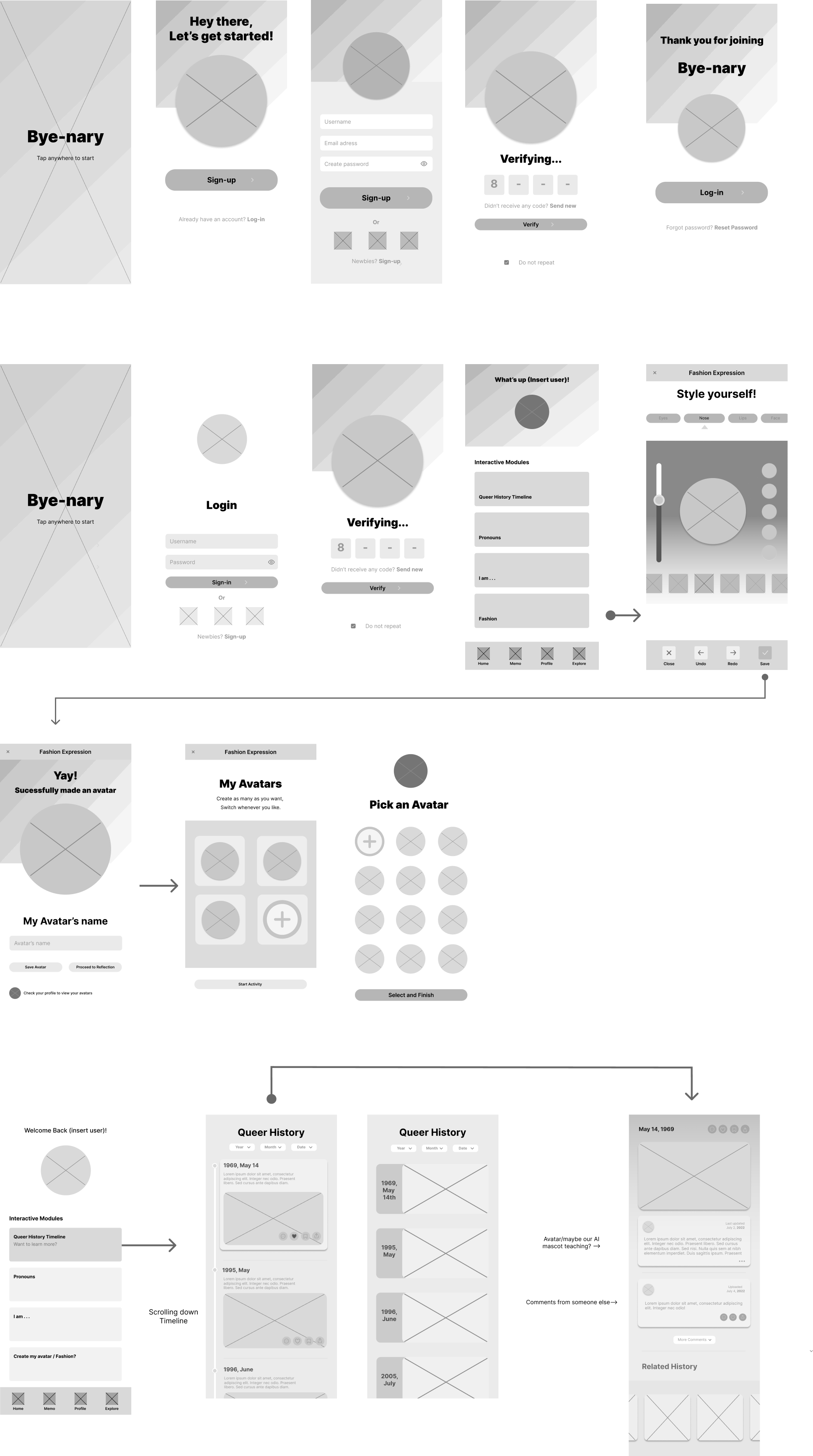
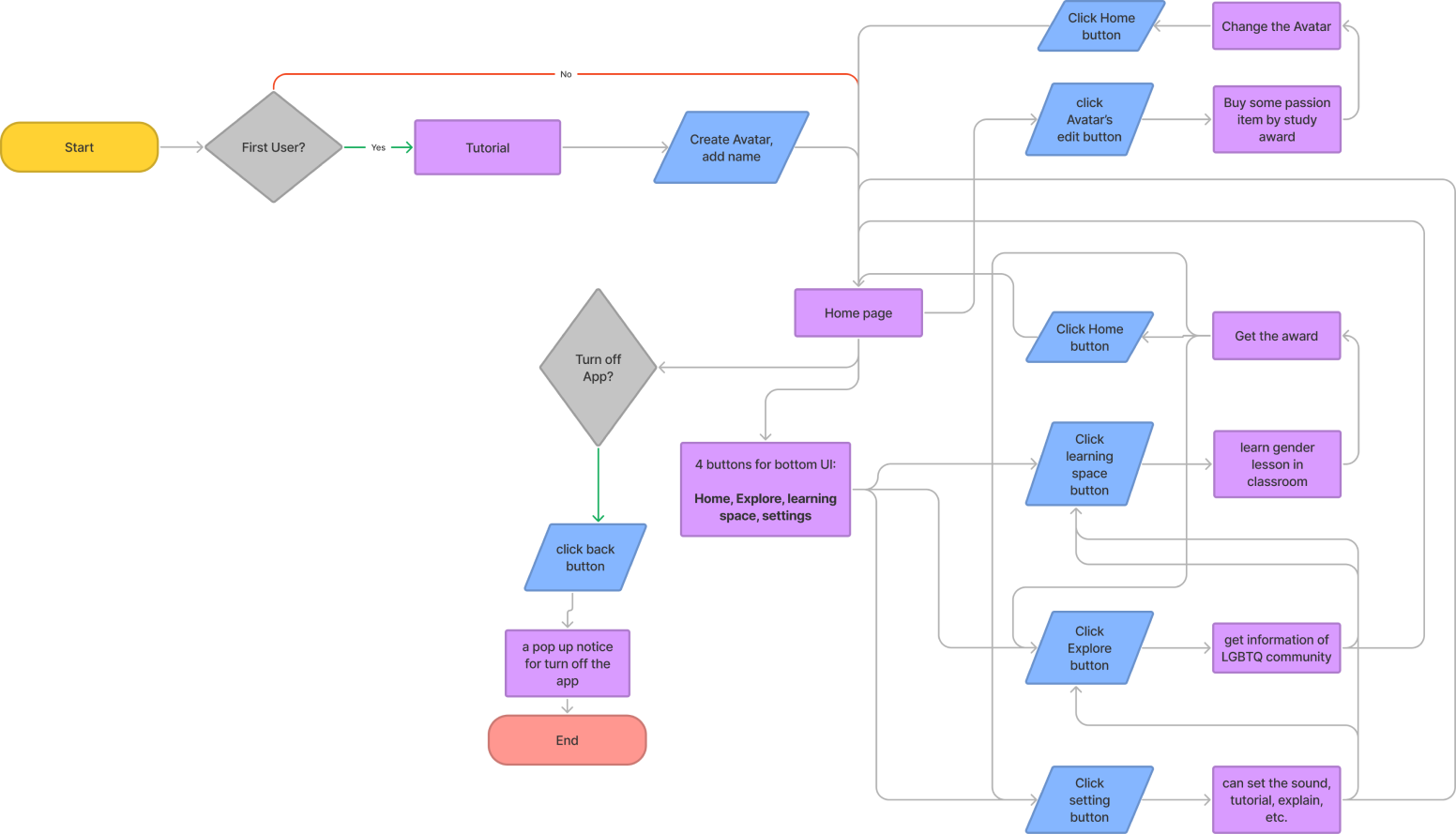
Bye-nary low fidelity wireframe detailing the onboarding, avatar creation, and interactive timeline / explore feature.
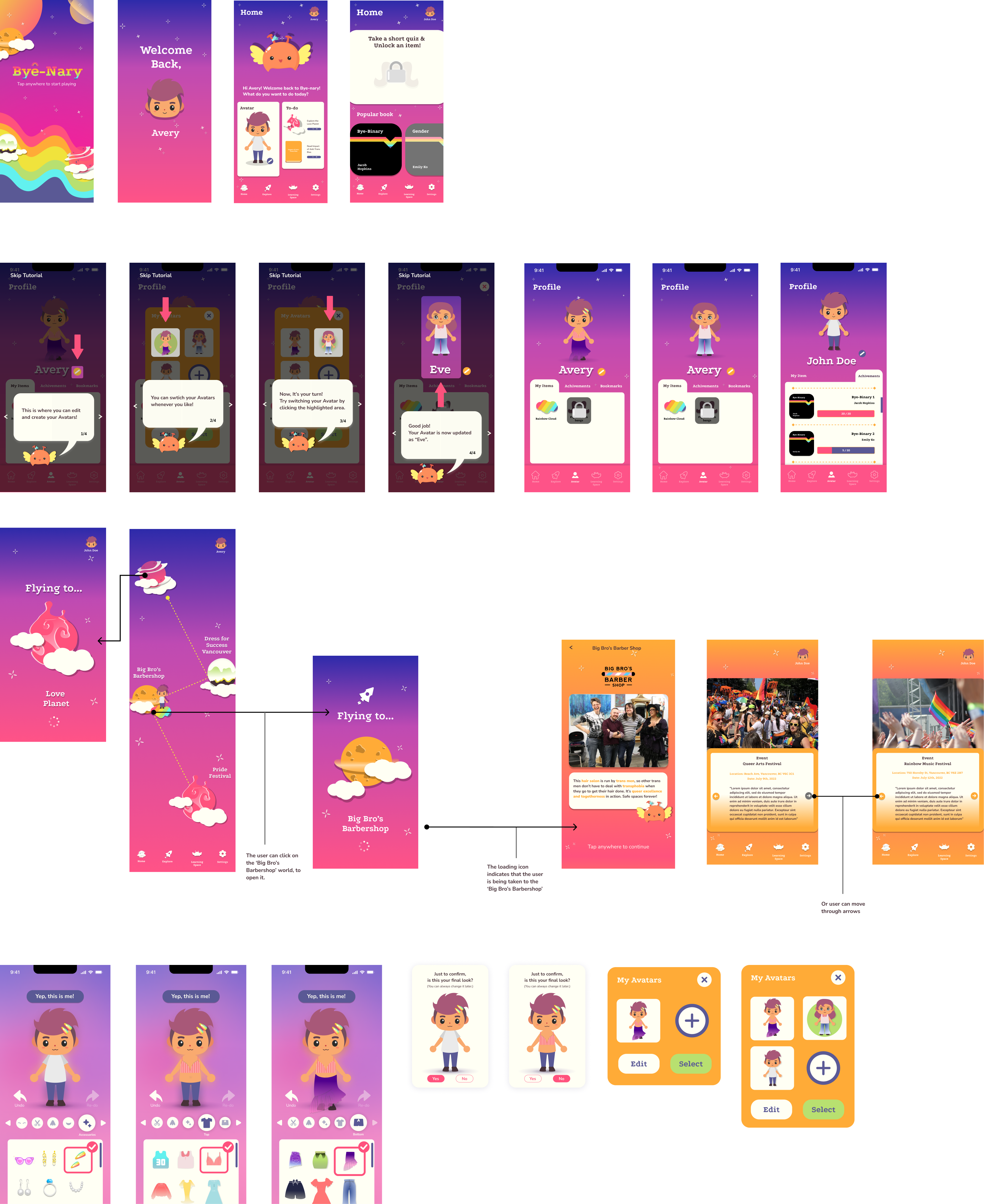
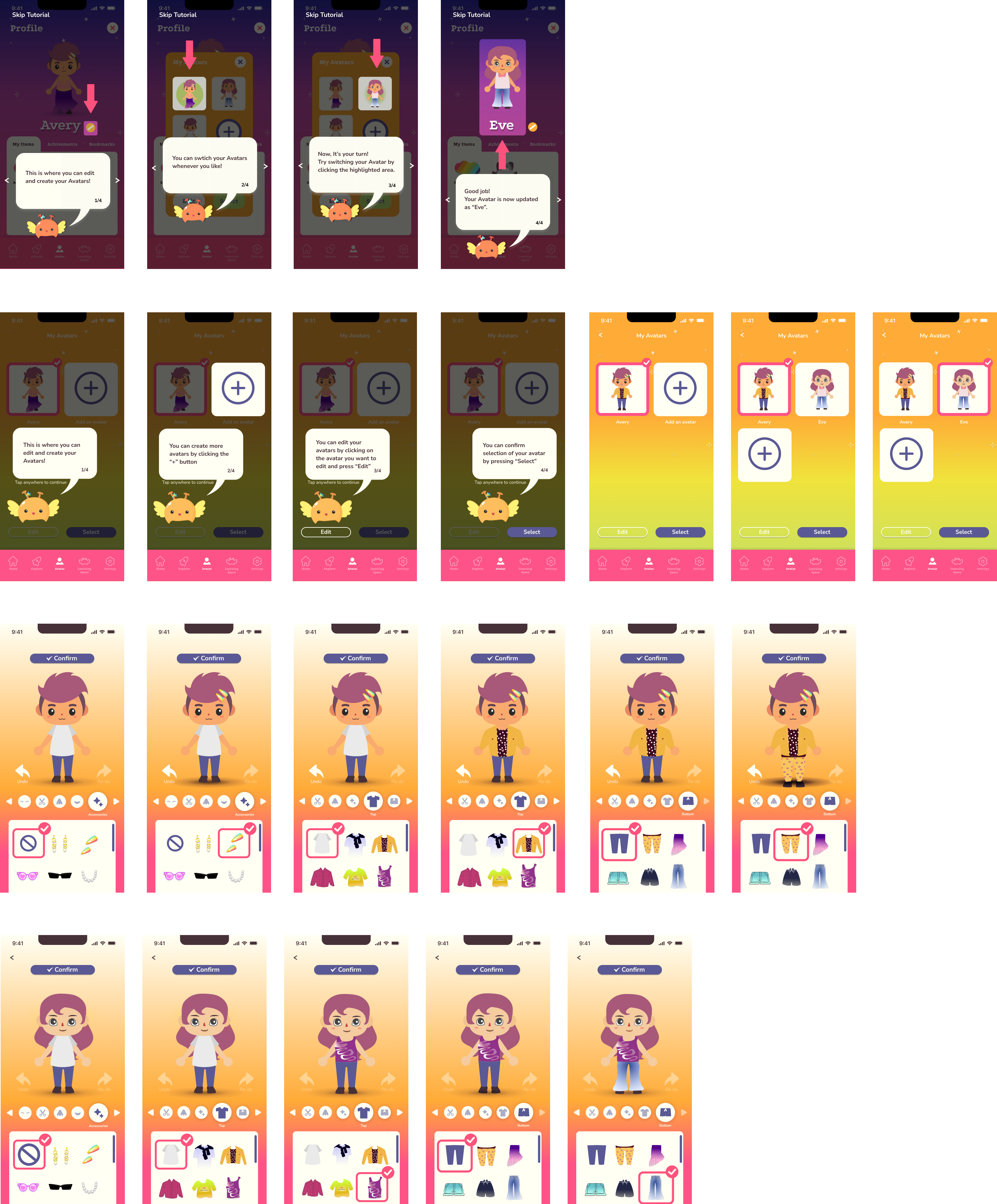
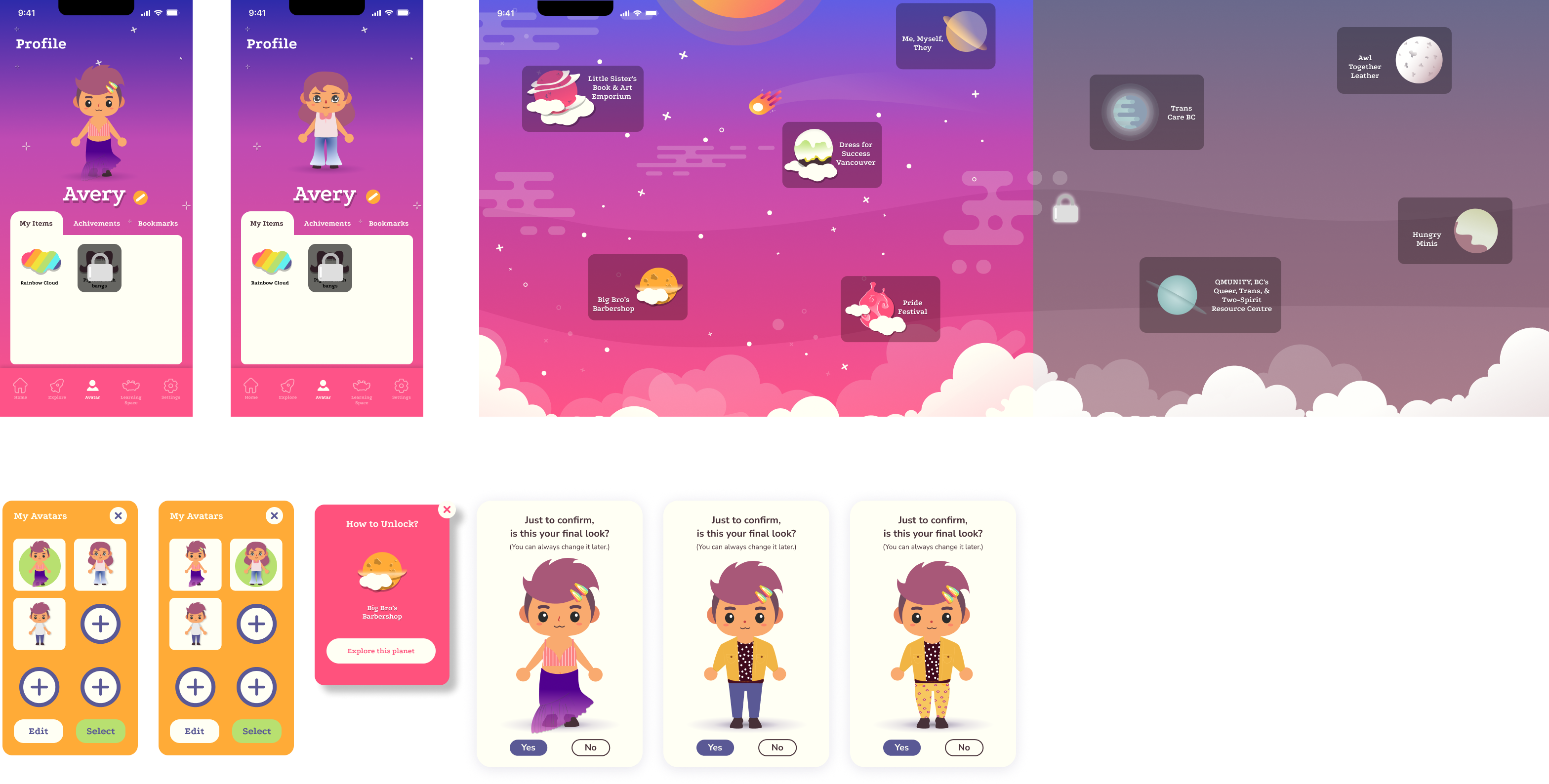
Bye-nary high fidelity mockup prototype with specific style guideline and illustrations implemented.
Explore was one of the main features in this application, but it was also the feature that went under the most iteration and time. Initially, I designed the map in Two-Dimension where the user scroll downwards to search planets they would like to visit. During user testing and critiques, users found this interaction boring, and felt like a lot of illustrations and interactions were flat.
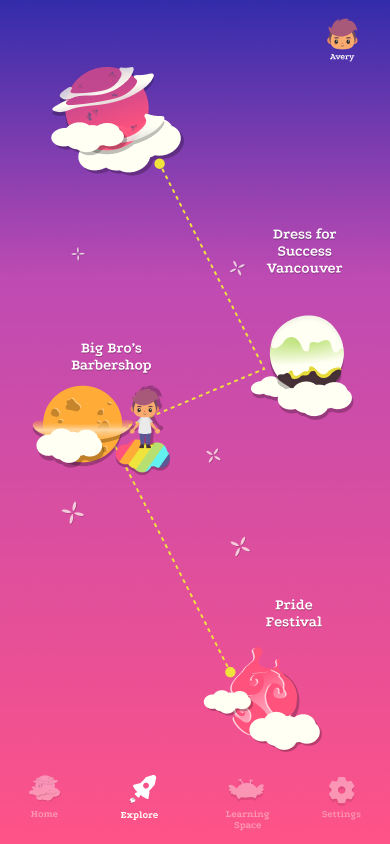
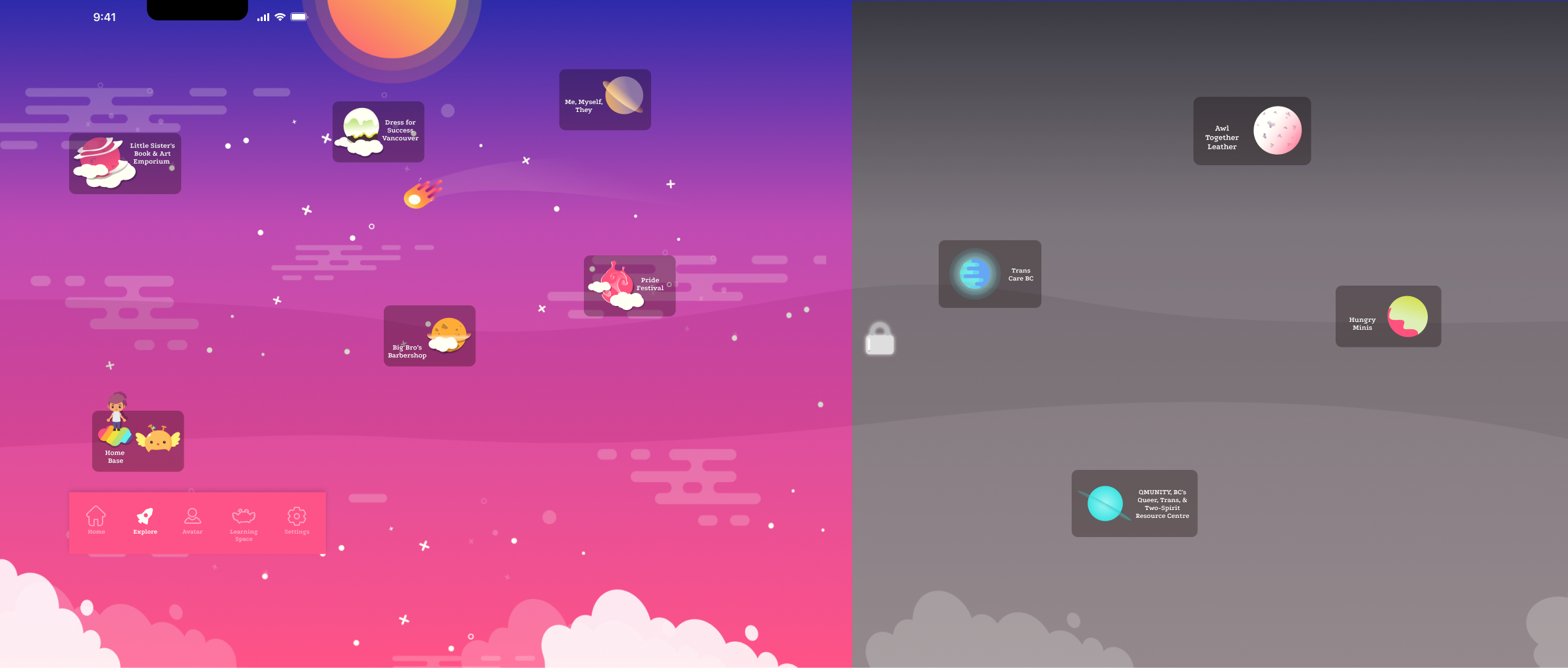
To solve this issue, I designed the map interactions less linear; to give users' more variety and fun when exploring the planets. Overall, this solution gave the interface a more interesting layout, making it more visually engaging. The user can scroll around the map, explore each planets, visit to learn and select questions to ask about local businesses. This interaction changes allowed our application to be more gamifying by showing the gray area - locked planets on the right.

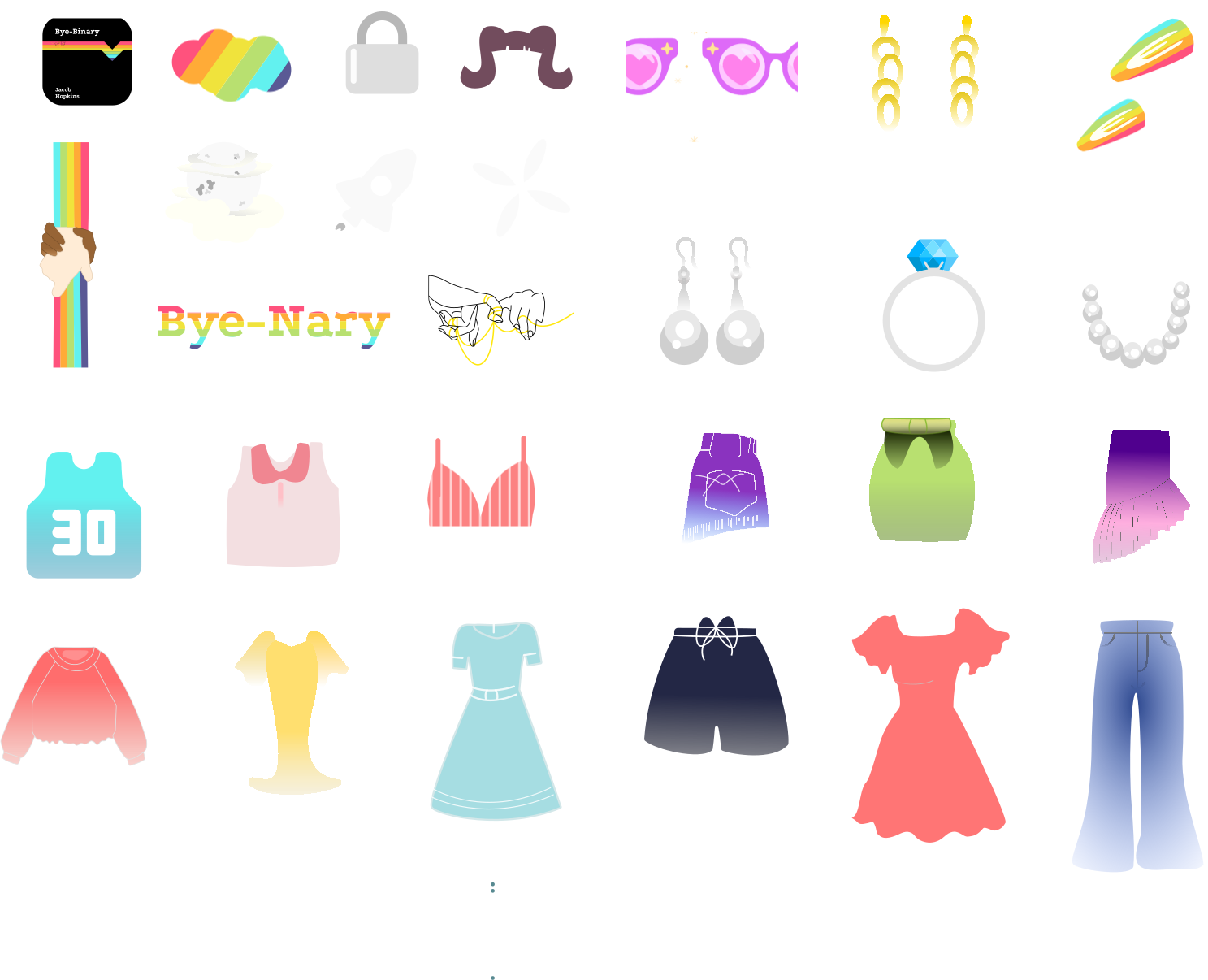
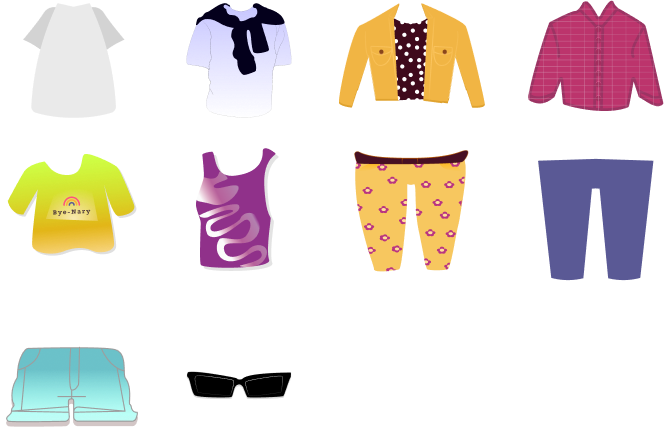
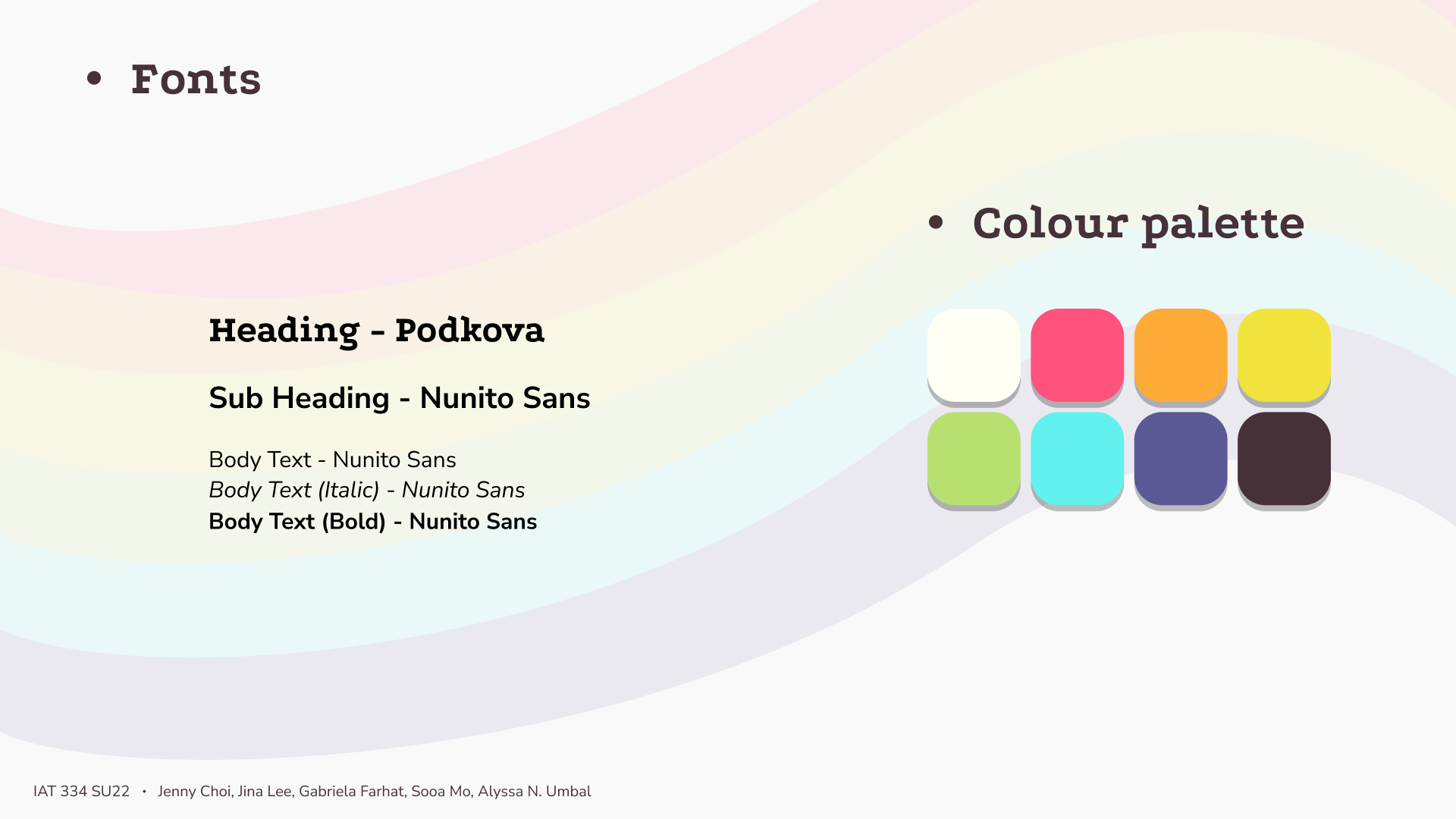
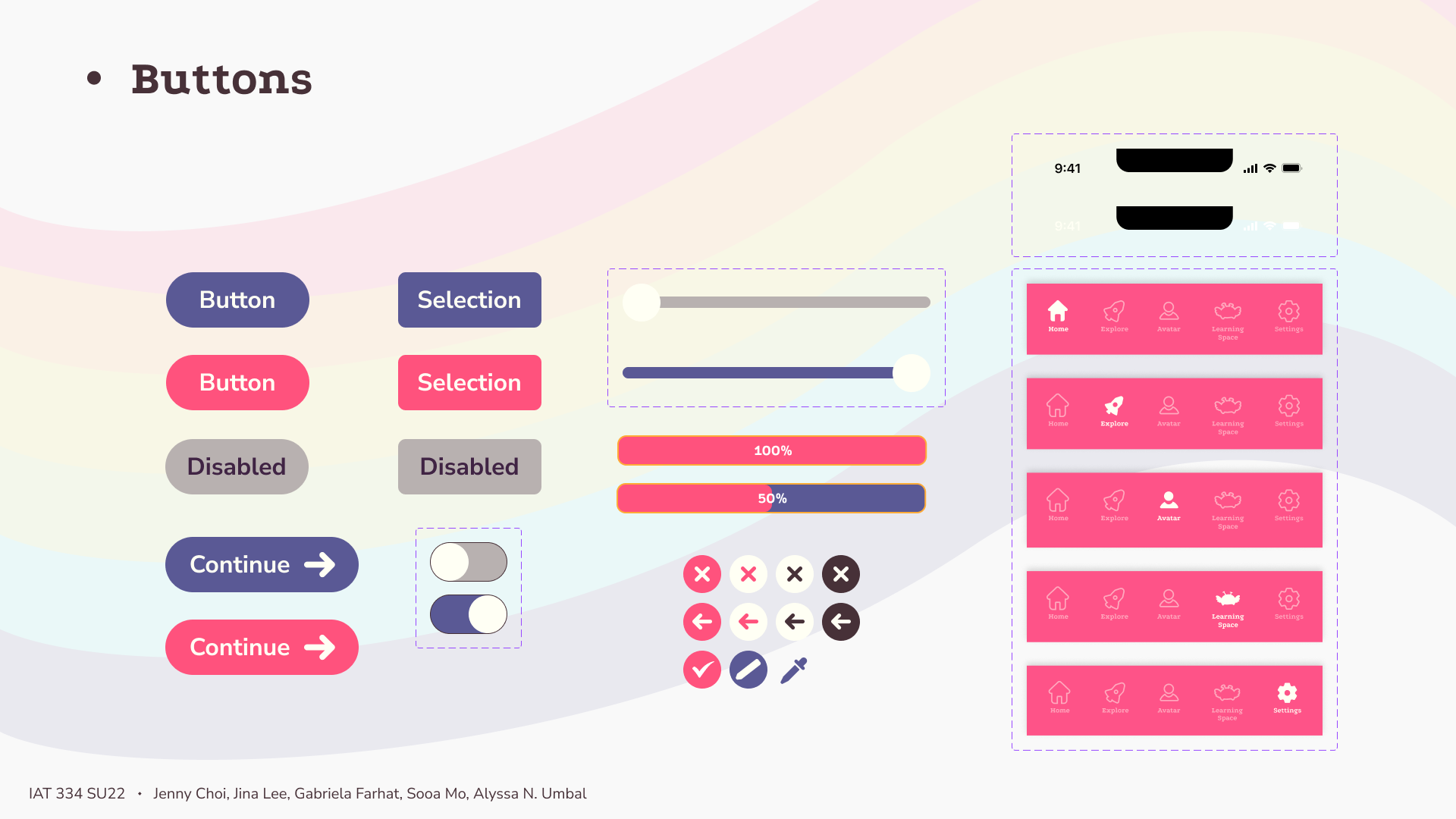
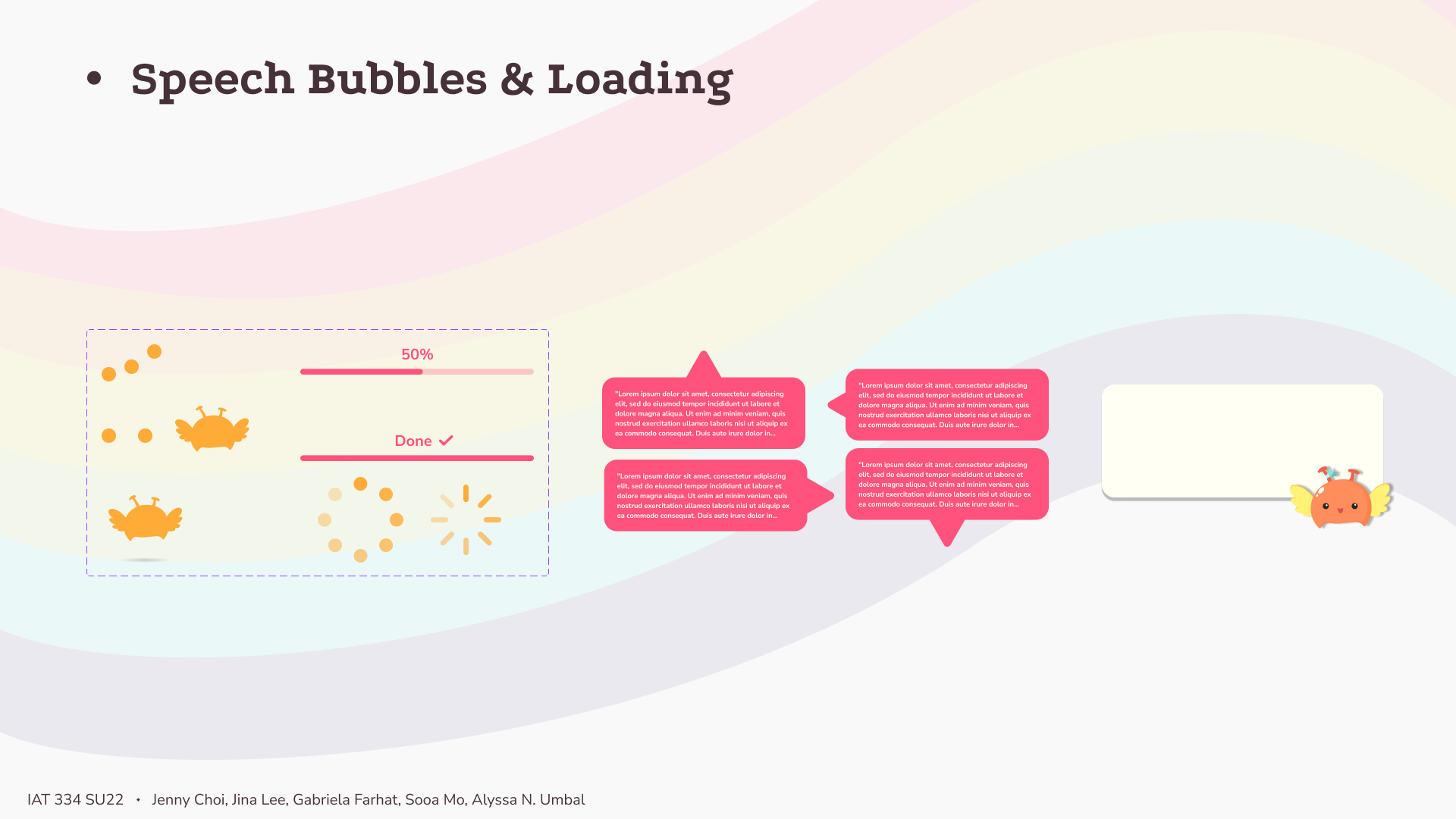
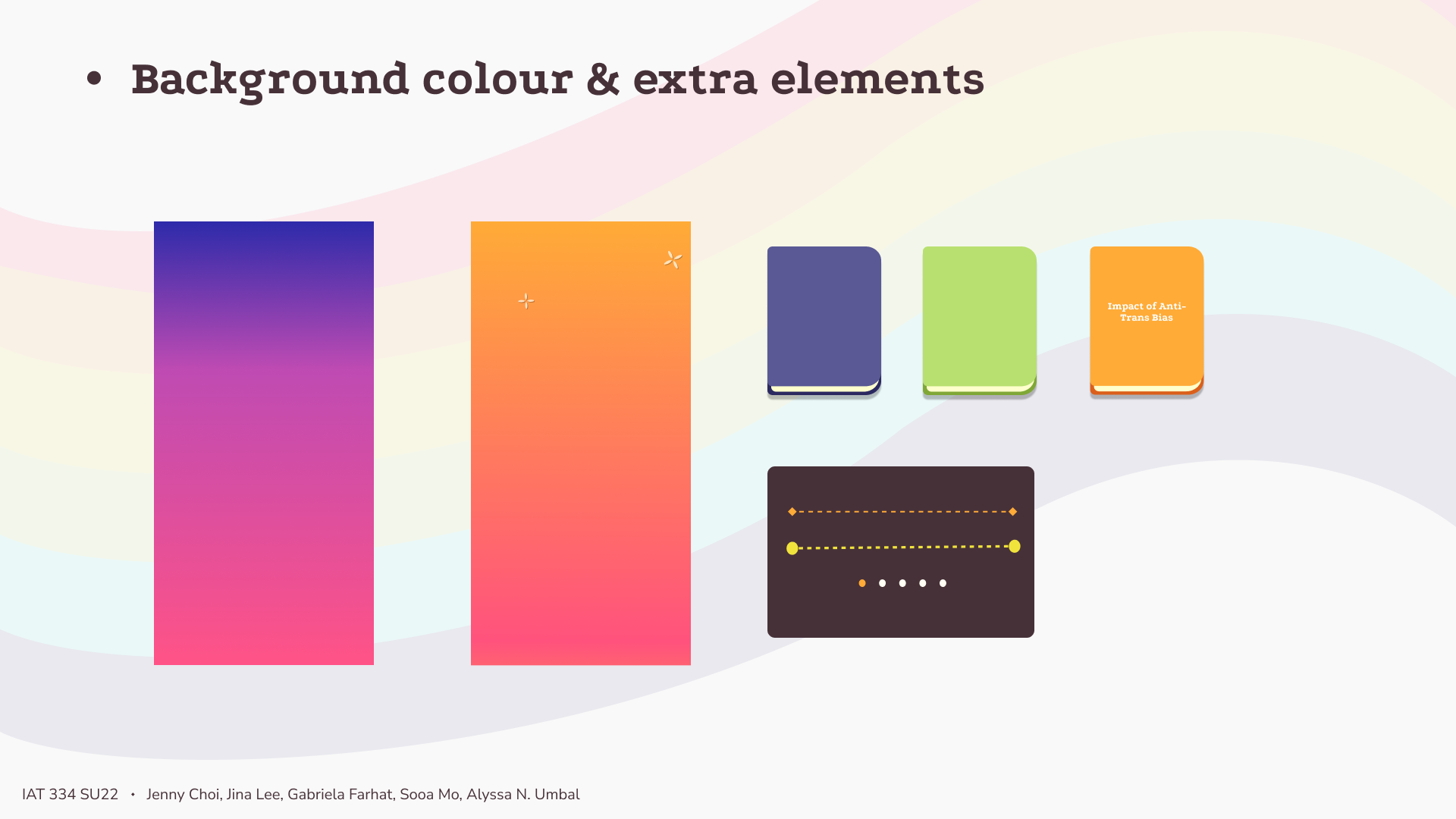
To ensure all elements of the app and print media follow the same design language, I developed a branding guideline and illustrations by considering icons, shape design and colour palette. I have also redesigned non-gendered clothings to align with Bye-nary's goal in helping non-binary and trans people.
This project allowed me to gain more experience in prototyping, and help to bring interfaces to life with more complex motion. Being able to adapt quickly to interface changes allowed me to develop my thinking process and workflow for collaboration between UI and prototyping.
It has helped me professionally as well, as this was a large-scale project in a short time frame. It allowed me think more rapidly, and develop more clear design decisions.